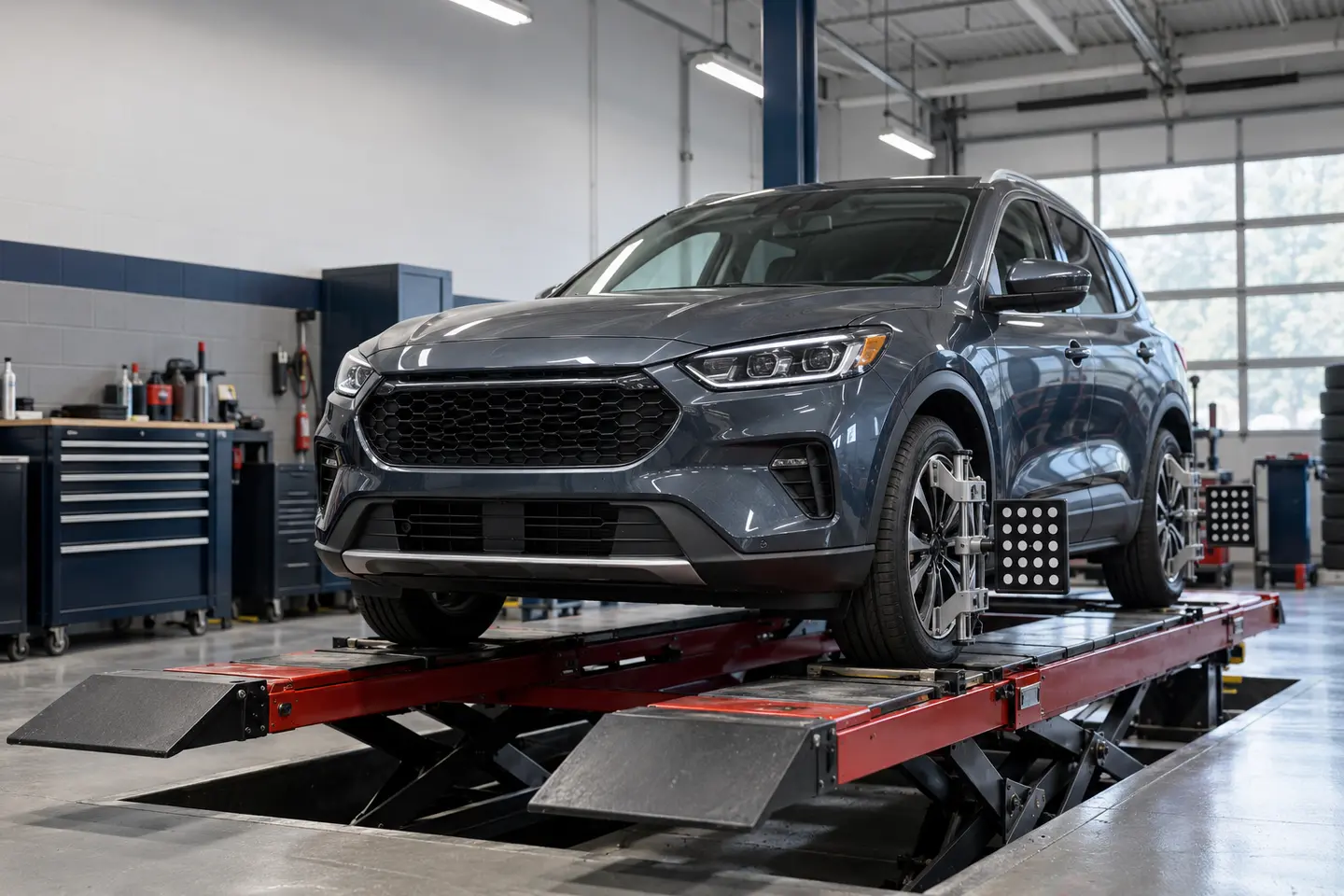
What is included?
- Steering and suspension checked before adjustment
- Four-wheel measurements
- Front and rear adjustments where the vehicle design allows
- Steering-wheel centring
- Road test
- Alignment printout
Signs an alignment should be checked
Uneven tire wear, a steering wheel that sits off-centre, pulling or drifting, or a change after a pothole impact are good reasons to measure alignment. Alignment is also commonly checked after replacing certain steering or suspension parts.
Why “four-wheel” does not mean every angle is adjustable
The machine reads all four wheels so the technician can see the vehicle’s thrust direction and compare each angle with specifications. Some vehicles have limited factory adjustment. If an angle is out of specification but not adjustable, repair, an approved adjustment component or further diagnosis may be needed.
Can an alignment stop brake vibration?
Usually not. A vibration that happens mainly while braking is more likely related to brake, hub, wheel or suspension condition. Read the brake vibration explanation before assuming alignment is the cure.
When should you avoid driving?
A mildly off-centre wheel or gradual tire wear normally calls for a timely appointment. Sudden severe pulling, a loose or unstable steering feel, obvious wheel damage or a major impact can indicate more than alignment. If the vehicle feels unsafe to control, stop driving and arrange an inspection.